Hrvatski
 Deutsch
 Italiano
 Français
 Українська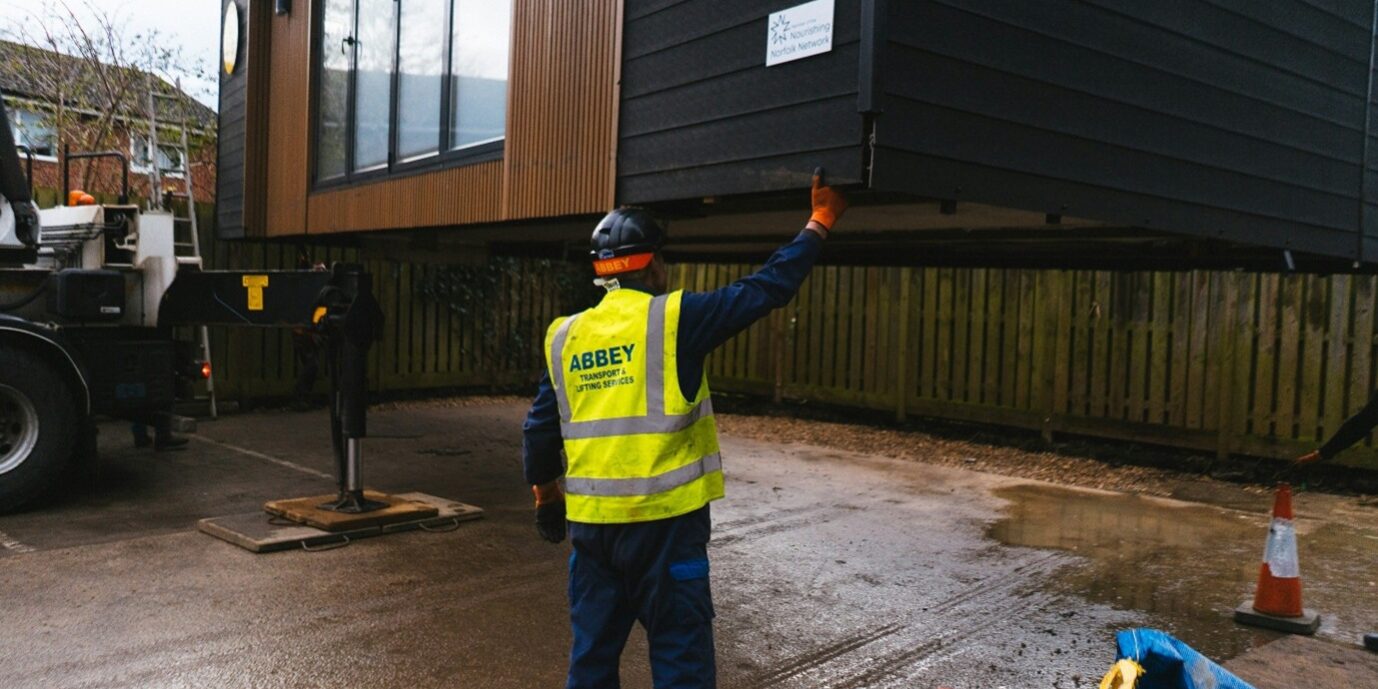
Photo by Phil Hearing on Unsplash
As of 30 April 2026, amendments to the Rulebook on the residence of third-country nationals in the Republic of Croatia (OG 43/2026) are in force, bringing a series of concrete obligations for employers and foreign workers: a mandatory medical examination and Form 18a for workers from the visa regime, a notarised promissory note for every foreign worker, a maximum of 8 persons per flat, the seasonal permit extended from 6 to 9 months, and two new permit categories — for public procurement and for the reconstruction of earthquake-damaged buildings. If your company employs third-country nationals or plans to, these changes require a swift adjustment of your business processes.
The amendments were published in Official Gazette (Narodne novine) No. 43/2026 on 22 April 2026 and entered into force on the eighth day after publication — 30 April 2026. Below is an overview of the most important changes, the concrete obligations of employers and the steps you should take immediately, compiled from the practice of the law office of Toni Primorac, which has for years represented employers in residence and work permit procedures, inspection proceedings and disputes concerning foreign workers in Croatia.
Summary of the key amendments to the Rulebook (OG 43/2026)
What changes from 30 April 2026:
- Form 18a — a mandatory certificate of health and vaccination status for the visa regime (Art. 8)
- Notarised promissory note for every foreign worker under Art. 95(3) of the Act (new Art. 32.a)
- A maximum of 8 persons per flat; 14 m² for the first person + 6 m² for each additional one; written consent of co-owners in buildings with 4+ flats
- Seasonal permit extended from 6 to 9 months per year (Art. 51)
- Labour market test is now waived only for the same employer, same worker and same occupation (Art. 33)
- New permit — public procurement (Art. 41.a) for workers posted by a foreign employer established outside the EEA
- New permit — reconstruction of earthquake-damaged buildings (Art. 41.b) for the City of Zagreb and 9 counties + EU-funded energy renovation
- EU Blue Card — terminology, long-term mobility without the 18-month requirement, autonomous residence for family members
- Long-term residence — expanded list of evidence; updated terminology
- Rent capped at 30% of net salary — and it may not be automatically deducted from the salary
TRANSITIONAL REGIME: For third-country nationals who already had a registered residence under the old Rulebook on 30 April 2026, the new accommodation requirements do not apply for one year — provided they continue to reside at the same address. The same one-year period applies to residence registration based on an extended permit and in procedures under Art. 97 of the Foreigners Act. Accommodation of seasonal workers in campsites (Art. 47(1) subpara. 4) is possible for a maximum of one year, within which compliance with spatial planning regulations must be achieved.
1. Mandatory certificate of health and vaccination status — Form 18a (Art. 8)
The most important novelty for workers from the visa regime is the introduction of the mandatory Form 18a — Certificate of health and vaccination status. The certificate is submitted with the application for a first temporary stay, while for extensions of stays shorter than three years, proof of a completed medical examination is submitted.
The examination is carried out by the county public health institutes according to the place of residence or by the Croatian Institute of Public Health (HZJZ), and the documentation may not be older than 90 days.
What does Article 8 prescribe?
(2) A third-country national from the visa regime must, together with the application for a first temporary stay permit, also submit a Certificate of health and vaccination status (Form 18a), which may not be older than 90 days.
(3) A third-country national from the visa regime must, together with the application for extension of temporary stay, if residing in the Republic of Croatia for less than three years, also submit proof of a completed medical examination.
(4) The medical examination referred to in paragraph 3 of this Article is carried out at the county public health institutes according to the place of residence and/or the Croatian Institute of Public Health, and proof of the completed examination may not be older than 90 days.
IMPORTANT: If you plan to bring in a worker from the visa regime, the medical examination must be completed before the application is filed. Without Form 18a the application cannot be approved, and a delay in the worker’s arrival can leave you short-handed in the middle of the season.
2. Notarised promissory note for every foreign worker (new Art. 32.a)
An entirely new obligation is prescribed by the new Article 32.a of the Rulebook. For every third-country national under Art. 95(3) of the Foreigners Act, the employer must deliver to the police administration that issued the certificate the original of a promissory note notarised (solemnised) by a notary public.
The police will issue a confirmation of receipt of the promissory note and will return it within 30 days of the obligation ceasing, with the note “promissory note returned (date)”. However, if the circumstances under Art. 95(2) of the Act arise — for example unpaid obligations towards the worker — the police forward the promissory note to the Financial Agency (FINA) for enforcement.
EXAMPLE: Your company employs 12 foreign workers. For each of them you must have a promissory note solemnised by a notary public and deliver the original to the competent police administration. Without this, the police cannot issue the certificate — and you cannot register the worker for work.
NOTE: The notarised promissory note is no longer a theoretical safeguard. If you fail to fulfil your obligations towards the worker, the promissory note ends up at FINA and becomes an enforceable basis for collection — including the blocking of the employer’s account.
3. Stricter accommodation requirements: a maximum of 8 persons per flat (Arts. 47–50)
The amendments introduce detailed and considerably stricter requirements for the adequate accommodation of seasonal workers and workers brought in based on the opinion of the Croatian Employment Service. This is the biggest operational change for the construction, hospitality, tourism, agriculture and logistics sectors, where accommodation is collective.
Types of buildings in which accommodation may be provided
- in a flat in a multi-apartment building
- in a less complex building with one or two housing units
- in a hospitality-tourism building (must not jeopardise its core business)
- in campsites in tourism zones — seasonal workers’ beds capped at 3% of total capacity
- in a building owned by the employer specifically intended for accommodation
- in a temporary structure on a construction site (with an act of the competent authority)
The key limits you must respect
- Floor area: 14 m² for the first person and an additional 6 m² for each subsequent person
- A maximum of 8 third-country nationals per flat, even where the floor area would allow more
- In less complex buildings with 1 or 2 housing units — a maximum of 10 workers per 150 m²
- Co-owners’ consent: in a building with 4 or more flats, if more than 4 unrelated adult foreigners will live in the same flat, the written consent of the co-owners is required
- The lease agreement must be certified by a notary public or the Tax Administration and must state the number of persons already residing in the premises
- At least 1 bathroom per flat, i.e. 1 bathroom per 150 m² in buildings with 1–2 units
- Sleeping quarters for men and women must be physically separated (except for family members)
Rent may not exceed 30% of the worker’s net salary and may not be automatically deducted from the salary. The employer must ensure adequate accommodation for the entire duration of the employment contract.
IMPORTANT: For workers who already have a registered residence on the date of entry into force, the new accommodation requirements do not apply for one year — provided they remain at the same residence. This gives you time to adapt, but not to procrastinate. Watch the deadlines.
Form 17a — declaration of adequate accommodation
Together with the application for a residence and work permit, as well as upon any change of adequate accommodation, the applicant signs a declaration of adequate accommodation (Form 17a). The form does not need to be notarised, but it is submitted under the employer’s criminal and material liability.
4. Seasonal permit extended from 6 to 9 months (Art. 51)
The maximum duration of seasonal work has been extended from six to nine months per year. The permit may be extended once with the same employer and once with another employer, giving seasonal employers considerably more flexibility in workforce planning.
An important practical relief has also been introduced: a seasonal worker with a valid permit for whom an extension application has been filed with the same or a new employer may continue to reside and work in the Republic of Croatia until the procedure is concluded. This avoids work stoppages caused by slower administrative procedures.
For extensions of up to 90 days, the application is filed via the online platform. A special regime applies to temporary employment agencies: a change of user undertaking requires a positive opinion of the Croatian Employment Service, and the agency must give written notice within 3 days.
5. Permit extensions: careful with changes of occupation (Art. 33)
The amendments regulate more precisely the extension of a residence and work permit without a labour market test. The labour market test is now waived only where the permit is extended for the same employer, the same third-country national and the same occupation, with the exception of seasonal work.
IMPORTANT: If your worker changes occupation with you — for example from carpenter to bricklayer — the extension is no longer automatic. The procedure then requires a labour market test, which means additional waiting. When planning work assignments, take into account the occupation stated in the permit.
6. New permits: public procurement and post-earthquake reconstruction (Arts. 41.a and 41.b)
Article 41.a — public procurement
The new Article 41.a regulates the permit for workers posted by a foreign employer with no establishment in the European Economic Area, based on a contract with a Croatian contracting authority in a public procurement procedure (Art. 110 item 31 of the Act). In addition to the usual documentation, the employment contract with the foreign employer and the contract between the Croatian contracting authority and that employer are submitted.
Article 41.b — reconstruction of earthquake-damaged buildings
Article 41.b is particularly important. It introduces a permit for work on the reconstruction of earthquake-damaged buildings in the following areas:
- the City of Zagreb
- Krapina-Zagorje, Zagreb, Sisak-Moslavina, Karlovac, Varaždin, Međimurje, Brod-Posavina, Koprivnica-Križevci and Bjelovar-Bilogora counties
The same regime also applies to EU co-funded energy and comprehensive building renovation. In addition to the usual documentation, a decision of the ministry responsible for construction (for public-purpose buildings also the decision of the owner/founder/manager) and the employer’s contract with the building owner are submitted.
7. EU Blue Card, posted workers and mobility from the EEA
The former terminology is aligned with the new Directive (EU) 2021/1883 — the permit is now consistently called the EU Blue Card. Importantly, for the long-term mobility of an EU Blue Card holder to Croatia, the previous requirement of 18 months’ residence in the first Member State no longer applies. The new Art. 45.a also introduces autonomous residence for a family member of an EU Blue Card holder.
The regime for workers posted from another EEA Member State or the Swiss Confederation for longer than 90 days in any 180-day period has been simplified — the special provision for workers arriving under international agreements has been repealed, so the general regime applies. For persons with long-term residence in another EEA Member State, a criminal record certificate is no longer required (Art. 23), speeding up the procedure for workers whose status in the Union is already regulated.
8. Long-term residence: expanded list of evidence (Arts. 28 and 30)
Throughout the Rulebook, the terminology for long-term residence has been updated, with an expanded list of evidence to be submitted with the application. In addition to the existing documentation and proof of knowledge of the Croatian language and Latin script, additional documents are now submitted for the special categories under Art. 150(4) of the Act — a certificate of the Croatian state administration for family members of officials posted abroad, an A1 certificate or employer’s certificate for workers posted to Norway, Iceland, Liechtenstein, Denmark or Switzerland, and an employer’s certificate of a stay abroad for business activities.
NOTE: Periods of residence abroad due to posting or business activities will no longer interrupt the continuity of residence required for acquiring long-term residence, provided that the prescribed documentation is submitted.
9. Other changes worth knowing
- Immigration and return of the Croatian diaspora (Art. 19) — the title changes; the certificate is issued by the ministry responsible for demography and immigration
- Victims of violence against women (Art. 22) — explicitly included as a basis for temporary stay on humanitarian grounds
- Bank account as proof of means of subsistence (Art. 6) — in addition to digital nomads, now also for family reunification with minor children (Art. 63(3) of the Act) and for autonomous residence after the death of a family member
- Residence registration (Art. 77) — lease agreements certified by a notary public or the Tax Administration; a cap of 4 unrelated adult third-country nationals per flat (otherwise written co-owners’ consent)
- Residence cannot be registered at the employer’s registered seat, unless adequate accommodation under Arts. 47–49 is provided
- Original documents (Art. 3) — originals may be explicitly requested until the procedure is concluded, regardless of how the application was filed
10. What should you do right away? A practical action plan
The amendments are not mere terminological cosmetics. They introduce concrete, measurable obligations that require employers to adapt internal procedures, update forms and prepare in good time before every new hiring of foreign workers.
- Check the health status of new visa-regime workers — schedule the examination at the county institute / HZJZ before filing the application (Form 18a, max 90 days old).
- Prepare notarised promissory notes — establish cooperation with a notary public and keep internal records of promissory notes per worker and obligation end dates.
- Review accommodation capacity — floor area, max 8 persons per flat, max 10 per 150 m² in buildings with 1–2 units, bathrooms, co-owners’ consent where required.
- Review lease agreements — certified by a notary public or the Tax Administration, with clearly stated rent (max 30% of net salary), floor area and the number of persons already registered.
- Use the transitional period — one year to bring accommodation into compliance for already registered workers; plan upgrades in good time.
- Consider the new options — seasonal work extended to 9 months, permits for public procurement and building reconstruction, EU Blue Card changes.
- Update templates and forms — introduce the new terminology.
- Train your HR team and managers — especially those signing Form 17a under criminal and material liability.
Frequently asked questions (FAQ)
When do the 2026 Residence Rulebook amendments enter into force?
The Rulebook amending the Rulebook on the residence of third-country nationals in Croatia was published in OG 43/2026 on 22 April 2026 and entered into force on the eighth day after publication, 30 April 2026.
What is Form 18a and who must submit it?
Form 18a is the Certificate of health and vaccination status, mandatory for third-country nationals from the visa regime applying for a first temporary stay. For extensions of stays shorter than three years, proof of a completed medical examination is submitted. The examination is performed by county public health institutes or the HZJZ, and the documentation may not be older than 90 days.
What is a notarised promissory note and who delivers it?
It is a promissory note solemnised by a notary public which, under the new Art. 32.a of the Rulebook, the employer delivers to the police administration for every foreign worker under Art. 95(3) of the Foreigners Act. The police return it to the employer within 30 days of the obligation ceasing. If the employer fails to fulfil its obligations towards the worker, the promissory note is forwarded to FINA for enforcement.
How many foreign workers may live in one flat?
A maximum of 8 third-country nationals may live in one flat, even where the floor area would allow more. The minimum floor area is 14 m² for the first person and an additional 6 m² for each subsequent person. In buildings with 4+ flats, if more than 4 unrelated adults from third countries will live in one flat, the written consent of the co-owners is required.
How long may seasonal work now last?
A seasonal permit may be valid for up to 9 months per year (instead of the previous 6). The permit may be extended once with the same employer and once with another employer.
May rent be deducted from the worker’s salary?
No. Under the new Art. 49, rent may not exceed 30% of net salary and may not be automatically deducted from the salary. The employer must provide a lease agreement or an owner-employer declaration clearly stating the terms and the amount of rent.
Who is not affected by the new accommodation requirements?
The new accommodation requirements do not apply for one year to third-country nationals who already had a registered residence under the old Rulebook on 30 April 2026 — provided they continue to reside at the same address.
Do I need a lawyer for the OG 43/2026 amendments?
While minor adjustments can be handled internally, more complex situations (reviewing contractual arrangements, accommodation capacity, proceedings before the Ministry of the Interior and administrative disputes, drafting promissory notes, temporary employment agencies, public procurement and post-earthquake reconstruction) call for specialised legal support. The law office of Toni Primorac in Rijeka specialises in employment and immigration law in Croatia and represents employers nationwide — in English as well.
Conclusion
The OG 43/2026 Rulebook is the biggest operational change in Croatian immigration law since the last amendments to the Foreigners Act. The health certificate becomes a condition for a first visa-regime stay, the promissory note becomes a mandatory part of the procedure for every foreign worker, and accommodation requirements are for the first time specified down to the number of persons, floor area and co-owners’ consent. At the same time, the legislator opens the door to longer seasonal engagement (9 months) and two new permit categories for public procurement and the reconstruction of earthquake-damaged buildings.
The one-year transitional period for accommodation compliance is a real opportunity — but only if used for a systematic review. Those who wait for the deadline are also waiting for their first inspection.
About the author — the law office of Toni Primorac
Attorney Toni Primorac heads the law office of Toni Primorac based in Rijeka, specialising in employment law, immigration law, residence and work permits, temporary employment agencies and administrative disputes before the Ministry of the Interior and the State Inspectorate. The office continuously represents employers throughout Croatia, including in the construction, hospitality, tourism, agriculture, logistics and IT sectors.
To date the office has represented more than 50 employers in proceedings related to the employers’ black list, initiated proceedings before the Ministry of Labour, the State Inspectorate and the Ministry of the Interior, and consistently advocates legality, proportionality and legal certainty in the application of immigration regulations.
An overview of all OG 43/2026 amendments is available as a side-by-side comparison of the old and new text — provided by the office to clients on request, with highlighted changes and practical notes.
Need legal support with the OG 43/2026 amendments?
If your company employs foreign workers — or plans to — a timely response can be decisive. The obligations concerning the health certificate, the notarised promissory note and the accommodation limits are particularly demanding. Primorac Legal assists employers with:
- preparing and filing residence and work permit applications (including Forms 17a and 18a)
- drafting and keeping records of notarised promissory notes
- reviewing accommodation contracts and capacity
- procedures under the new permit categories — public procurement (Art. 41.a) and post-earthquake reconstruction (Art. 41.b)
- EU Blue Card procedures, long-term mobility and autonomous residence
- representation in inspection proceedings, before the Ministry of the Interior and in administrative disputes
- proceedings related to the employers’ black list
Our office is at your disposal for a detailed analysis of your specific situation and preparation of all necessary documentation. Contact us with confidence — we will assess your case and propose the optimal approach.
CONTACT
Need our services?
Područja prava u kojima imamo iskustvo su: građansko pravo, vlasničkopravni odnosi, financijsko pravo trgovačkih društava, zemljišno-knjižno i ugovorno pravo. Svakoj grani prava, kao i svakom slučaju pristupamo predano, stručno i etično.